Welcome to Singapore: A World in One City!
Singapore is a special island where people from many cultures live, work and celebrate together. Here, Chinese, Malay, Indian, Arab and many other communities share spaces, traditions and food, creating a unique and harmonious way of life.
On this website, we’ll help you explore Singapore, including its cultural districts, famous landmarks, and hawker centers where people come together over food and stories.

THE CULTURAL DISTRICTS


LITTLE INDIA
CHINATOWN
KAMPONG GELAM
The vibrant heart of Tamil culture, where incense-filled temples, flower garland stalls, and spice merchants line the bustling streets of Serangoon Road.
A historic enclave defined by ornate shophouses, traditional medicine halls, and a vibrant street food culture.
The historic seat of Malay royalty, blending sacred architecture with trendy artisanal boutiques and street art.

LANDMARKS

Fullerton Building
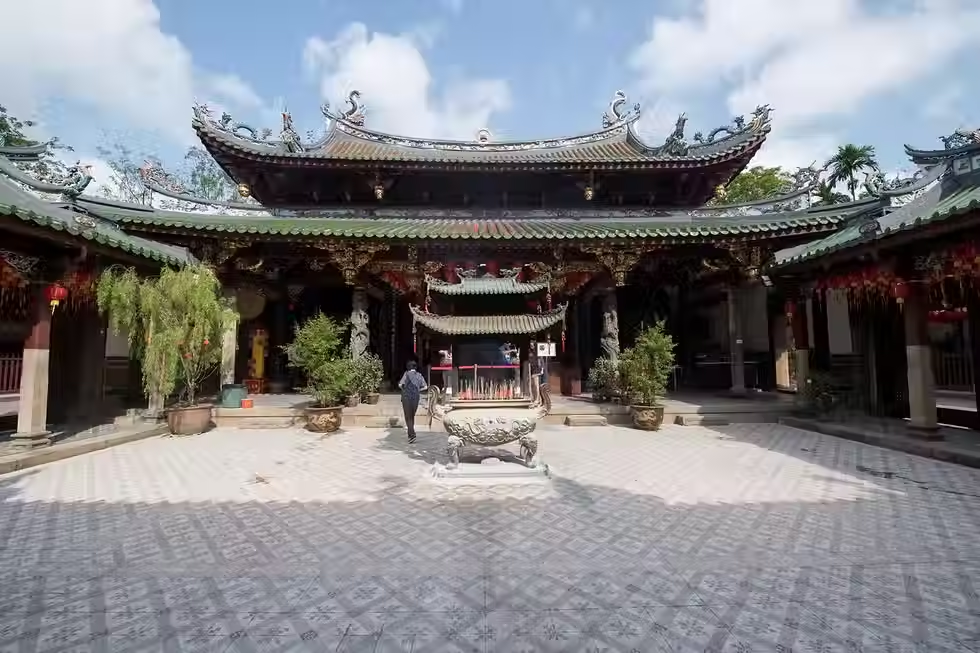
Thian Hock Keng
Once the city's General Post Office, this neoclassical masterpiece stands as a powerful symbol of Singapore's colonial history and architectural resilience.
Singapore's oldest Chinese temple, built in 1839 without a single nail, serves as a stunning testament to early Hokkien artisans and sea voyagers.
.jpg)
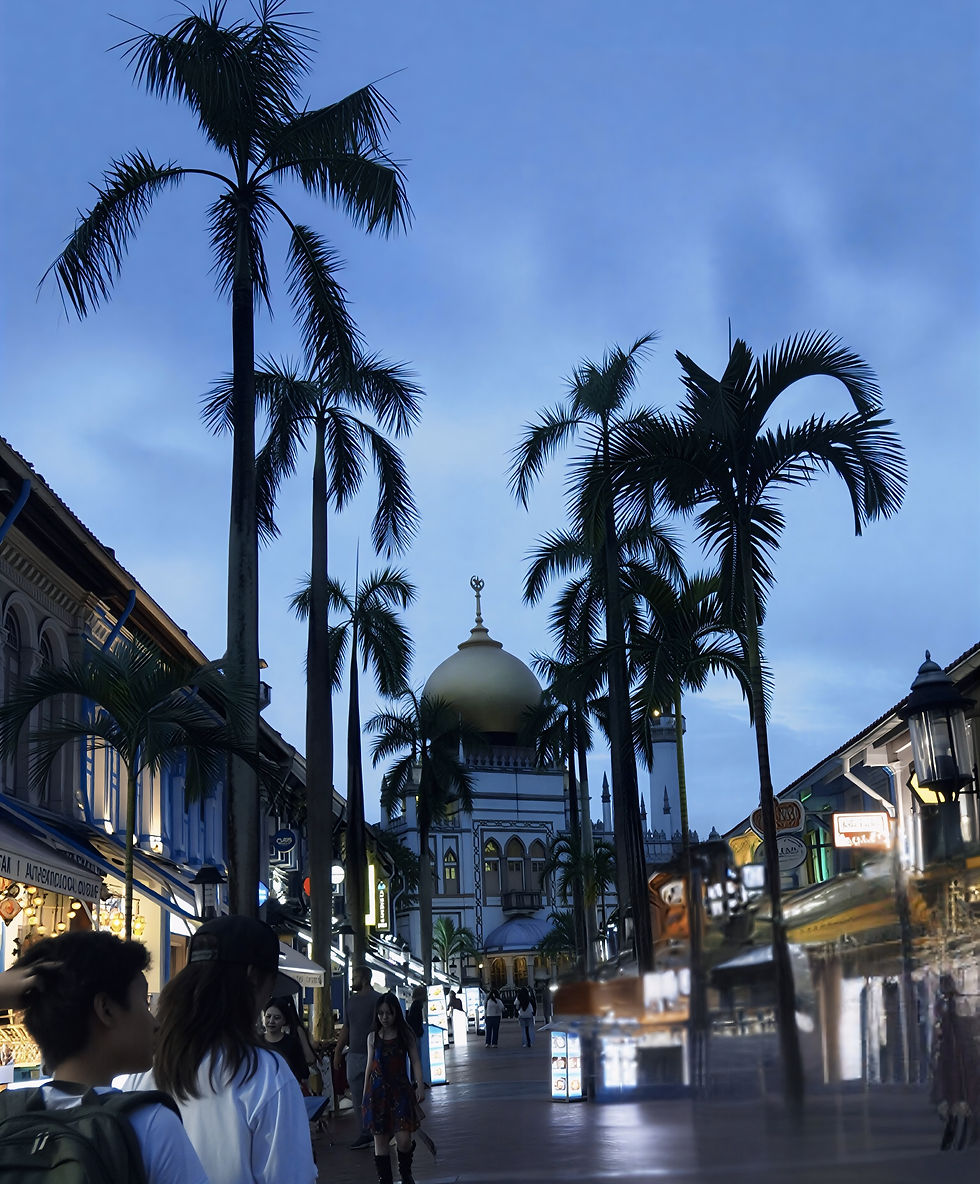
sultan
Mosque
sri mariamman temple
Originally built in 1824 for the first Sultan of Singapore and later reconstructed in 1932, this iconic mosque remains the focal point of the historic Kampong Glam district and a testament to the nation's long-standing Islamic heritage.
Founded in 1827 as Singapore's oldest Hindu temple, this National Monument is dedicated to the goddess Mariamman and is world-renowned for its intricate, multi-tiered gopuram covered in colorful sculptures of deities and mythological figures.
Singapore's story begins with its Malay roots and its position along busy ocean trade routes. In 1819, a British official named Stamford Raffles set up a trading post there, attracting large waves of Chinese and Tamil immigrants who each settled in their own neighborhoods.
Over time, these cultures began to blend. Chinese and Malay people intermarried, creating a new group called the Peranakans. Different foods shared the same food courts, and a new mixed dialect called Singlish was born.
When Singapore became independent in 1965, it officially recognized four languages English, Mandarin, Malay, and Tamil turning its cultural diversity into its greatest strength.
LANDMARKS THROUGH TIME
- 1824 – Sultan Mosque completed, serving the Malay-Muslim community.
- 1827 – Sri Mariamman Temple founded as Singapore’s oldest Hindu temple.
- 1842 – Thian Hock Keng completed, marking the first Chinese temple in Singapore
- 1928 – Fullerton Building opens as a key colonial landmark.
Food
Singapore is a country built by migrants from different parts of the world, especially China, Malay, India, and Arab regions. Over time, these cultures blended together and created Singapore’s unique food culture. Food is one of the best ways to understand how migration and cultural fusion shaped the country.
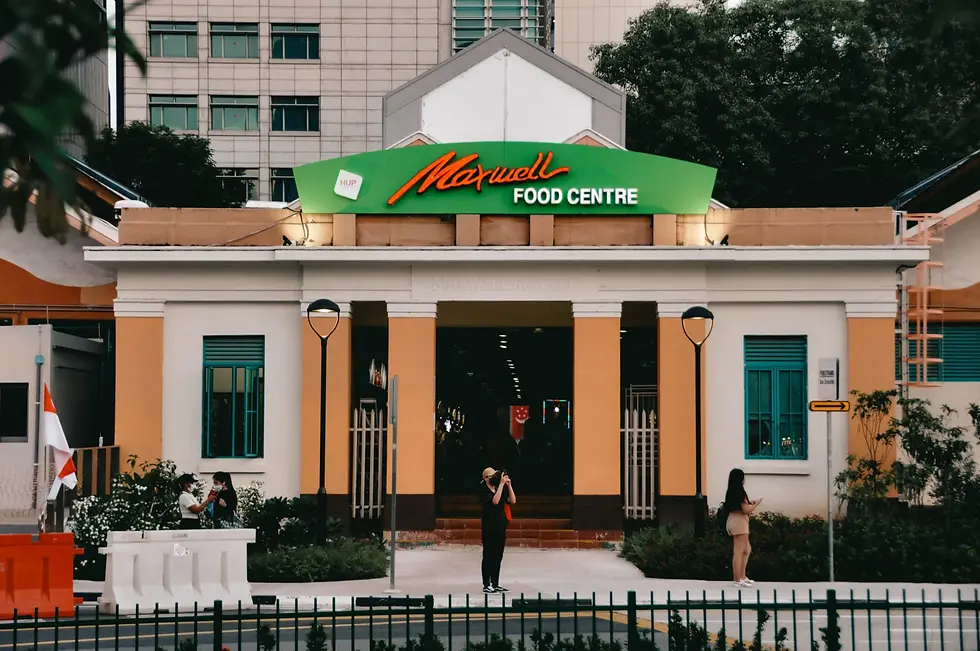
Maxwell Food Centre is one of the oldest and most famous hawker centres in Singapore. Located in Chinatown, it is a popular place for locals and tourists to enjoy affordable and traditional food. Chinatown has long been a gathering place for the Chinese community, and Maxwell Food Centre plays an important role in keeping Chinese food culture alive in Singapore.

Tekka Hawker Centre, located next to Little India MRT station, is one of the most well-known hawker centres in Singapore. It represents the Indian community and is famous for its wide variety of Indian and Indian Muslim food. Tekka Centre shows how Indian migrants brought their traditions to Singapore and made them part of local life.

Arab Street is known as the center of Malay and Muslim culture in Singapore. In the past, Arab traders came to Singapore for trade and brought their food and traditions with them. Today, the area is famous for its mosque and Middle Eastern restaurants, showing the strong influence of Arab culture in Singapore.
Fun Facts
-
Many Singaporeans speak a casual street language called Singlish, which mixes English with Malay, Hokkien, and Tamil. Words like "lah" and "leh" are added to the end of sentences to change the tone.
-
Singapore is known for being extremely clean and orderly. Littering, jaywalking, and vandalism all carry heavy fines, which is part of why the city looks so well-maintained.
-
Despite being a small country, Singapore has one of the busiest airports in the world and is a major hub for international business, finance, and travel in Southeast Asia.
HERITAGE • CULTURE • LEGACY • SINGAPORE •